Hello all!
I've been rather incommunicado this week. The reason for this is that I've been away in the deepest Finnish countryside, far from the nearest WiFi signal. Being away from the internet has its benefits, as when I can't read my email, address work issues, read blogs etc etc, there's no point in fretting about doing so. The minute I arrived in a slightly larger town, the first thing I did was, of course, look for a pub with a free internet connection... Admitting you have a problem is the first step :-)
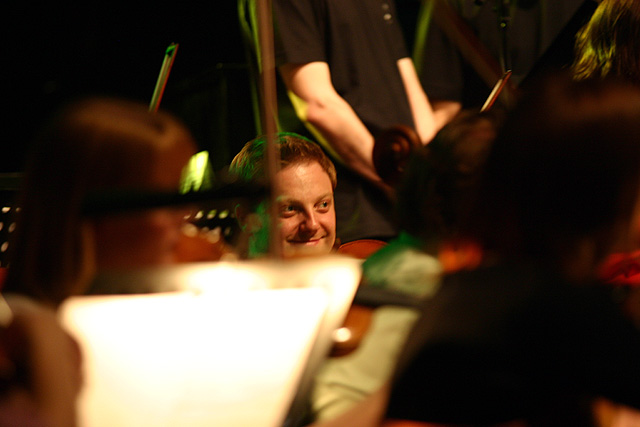
Not that it's been a particularly relaxing week, mind. I've been on an island called Aholansaari (the adopted home of the 19th century lay preacher Paavo Ruotsalainen and centre of the Finnish revivalist movement) rehearsing every day with the chamber orchestra, Aholansaari Sinfonietta. Our concert this evening, at the annual Finnish revivalist festival (which, though I'm not a member of the church, is a fascinating branch of Christianity, and warrants a blog entry all of its own), doesn't start until 10pm, so I have the whole afternoon to relax and catch up on everything that's been happening in the blogosphere.
Our concert programme is very interesting. We start with the overture to Mussorgsky's opera Khovanshchina (orch. Rimsky-Korsakov), followed by a selectioon of arias and interludes from Finnish composer Joonas Kokkonen's opera Viimeiset kiusaukset ('The Last Temptations'), which recounts the final days of the life of the afore-mentioned Paavo Ruotsalainen. The music is marvellous, as is our soloist, Esa Ruuttunen. We finish the concert with Mendelssohn's Fifth Symphony, 'The Reformation'. Hopefully my fingers will still be up to the tempi of the final movement by ten this evening...
Saturday, July 07, 2007


Thursday, June 28, 2007
Brown & Harman: Cabinet Makers

NEWSFLASH: David Miliband is appointed Foreign Minister; Jack Straw tipped as new Justice Minister! Full coverage available, as always, on the good old Beeb.
It looks like, finally, after ten years of "centre-left", "New" Labour, the new (with a small 'n') Brown administration is taking a distinct step back to the Left. Miliband, 41, almost stood against Brown in a leadership context, but declined (in my opinion, and with any luck, so that he can stand at a later opportunity). Jack Straw was (in)famously removed from the foreign office, allegedly at the behest of the US administration because of certain comments he made regarding their forein policy. His return to the reshuffled cabinet is most welcome.
Another marked step to the Left is in the appointment of Harriet Harman as deputy leader of the Labour party. I was very pleasantly surprised that she won the party vote (albeit by the narrowest of margins); she was my personal favourite, though I didn't fancy her chances of beating Peter Hain or Hillary Benn, both of whom were eventually eliminated at a relatively early stage of the game. Moreover, I am glad to see the position occupied not only by a woman, but by a woman with distinctly "Old" Labour sensibilities.
The above photograph is not very flattering – Brown looks drunk, and just what is he doing to our Harriet? I googled the net for an image (this is from the BBC) of the two new leaders of the party together, but amusingly, the first link to appear was for antique furniture restorers, Brown & Harman – Cabinet Makers. You couldn't make it up, could you!
Wednesday, June 27, 2007
Energetic, moi?
I'm indebted to Sean from Alone and Unobserved for introducing me to The Onion, which, after reading only a few articles, really sounds like my kind of newspaper! I trust he also noticed the following article, but thought that my Late Review readers would appreciate it too. Enjoy!
After reading all that, I think perhaps I should reassess my view of myself. I never feel full of energy – at any time of day; my idea of being super-organised in the morning is not missing my bus, or at a stretch, getting up in time to have something resembling breakfast and maybe make a pot of coffee, and still not missing the bus. As for going to the gym and running six miles a day, you've got to be kidding. Mind you, I have been known to spend a great deal of time at book launches, hobnobbing with authors, ambassadors and the like. Well, if you can't laugh at yourself...


After reading all that, I think perhaps I should reassess my view of myself. I never feel full of energy – at any time of day; my idea of being super-organised in the morning is not missing my bus, or at a stretch, getting up in time to have something resembling breakfast and maybe make a pot of coffee, and still not missing the bus. As for going to the gym and running six miles a day, you've got to be kidding. Mind you, I have been known to spend a great deal of time at book launches, hobnobbing with authors, ambassadors and the like. Well, if you can't laugh at yourself...
Blair's Legacy
What a week it’s been in British politics! The removal companies will certainly have their work cut out in Downing Street this week: Tony Blair has finally bowed out (where is he going to go, what is he going to do?), leaving Gordon Brown as the new PM.
The last ten years have been something of a mixed bag for Blair, though sadly the latter half of his tenure has seen far more downs than ups. He never really managed to recapture or capitalise upon the sense of awe that most of us (bar the Tories) experienced when Labour first swept to power in 1997 (the mood was accurately captured in Stephen Frears’ recent film The Queen with Helen Mirren; read my review here).
I’m not sure what to make of Blair’s time in power. Whatever my reservations about some of the decisions he made, I’m certainly happy that he was the one making them, as opposed to, say, William Hague (I shudder to think…) Sadly, Blair will be remembered more for his allegiance with the US administration and for the ensuing calamity in Iraq than for the many positive things he achieved: brokering the peace agreement and implementing a system of power-sharing in Northern Ireland; his focus on eliminating child poverty; improvements to the NHS; the minimum wage; equality for all; civil rights for gays and lesbians; the repeal of homophobic legislation such as Thatcher’s infamous Section 28. The list goes on.
[Having said that, the progress Blair’s government has made in the areas of equality and gay rights was all cast in a rather dubious light yesterday with the announcement that he is to convert to Roman Catholicism. As an atheist, I often find it hard to reconcile faith and issues of sexuality. How can someone who believes in gay rights, or someone who is gay, for that matter, become a member of an organisation that has systematically oppressed us for centuries? Moreover, why would they wish to do this? Of course, you could write a book on this subject.]
Neither am I sure what to make of his resignation speech, a minor PR stunt in itself. But when he said, “Hand on heart […] I did what I thought was right for our country”, I tend to believe him, though I wouldn’t trust those words from the mouths of many other world leaders. And though I vehemently disagree with a number of Labour’s policy decisions over the years (for instance, I still can’t quite believe that it was a Labour government that introduced university tuition fees), and in particular with the whole debacle in Iraq, I feel I can trust the reasoning behind their decisions, and am glad the Tories weren’t making those decisions instead.
Why is it that we trust Blair? I can’t say. Ultimately, this is the reason we elect leaders, in order that they may make agonising decisions which affect us all, so that we don’t have to.
The last ten years have been something of a mixed bag for Blair, though sadly the latter half of his tenure has seen far more downs than ups. He never really managed to recapture or capitalise upon the sense of awe that most of us (bar the Tories) experienced when Labour first swept to power in 1997 (the mood was accurately captured in Stephen Frears’ recent film The Queen with Helen Mirren; read my review here).
I’m not sure what to make of Blair’s time in power. Whatever my reservations about some of the decisions he made, I’m certainly happy that he was the one making them, as opposed to, say, William Hague (I shudder to think…) Sadly, Blair will be remembered more for his allegiance with the US administration and for the ensuing calamity in Iraq than for the many positive things he achieved: brokering the peace agreement and implementing a system of power-sharing in Northern Ireland; his focus on eliminating child poverty; improvements to the NHS; the minimum wage; equality for all; civil rights for gays and lesbians; the repeal of homophobic legislation such as Thatcher’s infamous Section 28. The list goes on.
[Having said that, the progress Blair’s government has made in the areas of equality and gay rights was all cast in a rather dubious light yesterday with the announcement that he is to convert to Roman Catholicism. As an atheist, I often find it hard to reconcile faith and issues of sexuality. How can someone who believes in gay rights, or someone who is gay, for that matter, become a member of an organisation that has systematically oppressed us for centuries? Moreover, why would they wish to do this? Of course, you could write a book on this subject.]
Neither am I sure what to make of his resignation speech, a minor PR stunt in itself. But when he said, “Hand on heart […] I did what I thought was right for our country”, I tend to believe him, though I wouldn’t trust those words from the mouths of many other world leaders. And though I vehemently disagree with a number of Labour’s policy decisions over the years (for instance, I still can’t quite believe that it was a Labour government that introduced university tuition fees), and in particular with the whole debacle in Iraq, I feel I can trust the reasoning behind their decisions, and am glad the Tories weren’t making those decisions instead.
Why is it that we trust Blair? I can’t say. Ultimately, this is the reason we elect leaders, in order that they may make agonising decisions which affect us all, so that we don’t have to.
Sunday, June 24, 2007
Nature's Call
This afternoon I got back from a very relaxing Midsummer break in a Finnish countryside idyll, where I spent the weekend with my friends E and O at the latter's family cottage. Good food and much beverage was consumed by all; we sat in the porch all day reading detective novels and generally soaking up the lazy Midsummer atmosphere.
O's cottage is wonderful: walls of old logs, low ceilings, mice, the real deal. There are only three drawbacks: no lake, no electricity and no running water (= outdoor loo). For men, having a toilet that flushes perhaps isn't such a big deal – after all, most of the time you don't need to sit down. E, on the other hand, bemoaned the fact that she had to squat ungraciously and uncomfortably every time nature called. À propos this very subject, our translator colleague L last week edified us about women's britches in the 19th century, which had a flap in the middle for easy access and the use of stand-up female urinals. A quick look on Google reveals a few very interesting articles on the subject, notably this one.
Now, however, it looks as though women's days of squatting in the bushes are over. While reading an interview with our favourite author Sarah Waters, we came across the following marvellous link. What I like most about this are the blurbs, the photographs and, above all, the name. Why would a woman running along a sand dune be carrying such a thing – in her handbag? Oh well, going to the summer cottage will never be the same again...
O's cottage is wonderful: walls of old logs, low ceilings, mice, the real deal. There are only three drawbacks: no lake, no electricity and no running water (= outdoor loo). For men, having a toilet that flushes perhaps isn't such a big deal – after all, most of the time you don't need to sit down. E, on the other hand, bemoaned the fact that she had to squat ungraciously and uncomfortably every time nature called. À propos this very subject, our translator colleague L last week edified us about women's britches in the 19th century, which had a flap in the middle for easy access and the use of stand-up female urinals. A quick look on Google reveals a few very interesting articles on the subject, notably this one.
Now, however, it looks as though women's days of squatting in the bushes are over. While reading an interview with our favourite author Sarah Waters, we came across the following marvellous link. What I like most about this are the blurbs, the photographs and, above all, the name. Why would a woman running along a sand dune be carrying such a thing – in her handbag? Oh well, going to the summer cottage will never be the same again...
Monday, June 18, 2007
Compelling, Inscrutable, and Relentless
Apart from seeing me into my fourth decade, June 8th saw the English-language première of Laura Ruohonen's Queen C ('Kuningatar K'), a play I translated some five years ago. The play was finally performed in its entirety in English by the Lit Moon Theater Company in Santa Barbara in a production directed by their in-house director, John Blondell.
I was unable to attend to the performance, partly because of my busy schedule, partly because I wasn't invited (grrr...), and have been keen to find any information about the production online. This morning I came across Elizabeth Schwyzer's review in the Santa Barbara Independent. The photograph is great (depicting, I assume, Queen Christina and the Friend) and the review is generally very positive.
Needless to say, the translator doesn't get a mention anywhere. This is a common phenomenon. Do people think texts translate themselves? Initially I was slightly concerned about this project, as the performance was to be in the States, while my translation is very much in British English. After working on the text for over five years, I was keen that the director consult me on any potential alterations. Thankfully, it would appear that none were necessary; perhaps British English suits the monarchical tone and milieu of the play.
Looking on the bright side, not getting a mention in the review means that the translation didn't make its presence felt at the expense of the drama. The British English was acceptable. The audience was 'unaware' of the translation, allowing the 'foreign' original to shine through unhindered. More often than not, when translations are mentioned in reviews it is to comment that "the translation was clumsy" or "the play doesn't translate well" – though quite how reviewers have the linguistic knowledge necessary to make such claims remains a mystery. In this instance, however, Schwyzer rounds off her review with the following comment:
I was unable to attend to the performance, partly because of my busy schedule, partly because I wasn't invited (grrr...), and have been keen to find any information about the production online. This morning I came across Elizabeth Schwyzer's review in the Santa Barbara Independent. The photograph is great (depicting, I assume, Queen Christina and the Friend) and the review is generally very positive.
Needless to say, the translator doesn't get a mention anywhere. This is a common phenomenon. Do people think texts translate themselves? Initially I was slightly concerned about this project, as the performance was to be in the States, while my translation is very much in British English. After working on the text for over five years, I was keen that the director consult me on any potential alterations. Thankfully, it would appear that none were necessary; perhaps British English suits the monarchical tone and milieu of the play.
Looking on the bright side, not getting a mention in the review means that the translation didn't make its presence felt at the expense of the drama. The British English was acceptable. The audience was 'unaware' of the translation, allowing the 'foreign' original to shine through unhindered. More often than not, when translations are mentioned in reviews it is to comment that "the translation was clumsy" or "the play doesn't translate well" – though quite how reviewers have the linguistic knowledge necessary to make such claims remains a mystery. In this instance, however, Schwyzer rounds off her review with the following comment:
John Blondell’s direction captured the play’s layered, poetic, and metaphorical nature — letting out the script’s humor and absurdity, as well as its deep ambiguities and tragic moments. The playwright took it all in, rapt and beaming.I may not have got a mention, but I think there is some consolation to be had in these words.
Friday, June 15, 2007
Solitude (Part II): Further Musings
I’ve now thought about the issue of the afore-mentioned article overnight and discussed it with two friends. After much debate, we finally arrived at the following interpretation.
Harakka, who has also written extensively for the left-leaning environmental magazine Vihreä Lanka (‘Green Thread’), has long been a supporter of Halonen’s (re)election and of her policies. Halonen is even to appear on his TV programme ‘Ten Books that Changed the World’ on Monday 18th June. Perhaps what his column is trying to say (if rather unsuccessfully) is that the obsession in Finland with America in general and with Kanerva’s hyped visit in particular is so great that even Halonen herself is beginning to yield to the pervading opinions, as expressed in the final paragraph of the column.
Tuesday’s papers were positively frothing over news of the ‘successful’ meeting between the two foreign ministers. Iltalehti featured an entire two-page spread about it, complete with photographs of the pair shaking hands and beaming at one another, and bearing the cringe-worthy headline, ‘Call me Condi!’ On a new page, Iltalehti continued by claiming that ‘ministers congratulated Kanerva’ on the ‘success’ of the meeting. And who were the ministers interviewed? None other than Ben Zyskowicz and Pertti Salolainen, both from Kanerva’s own party! At least they also interviewed Liisa Jaakonsaari of the Social Democrats, who pointed out that preparations for Halonen’s proposed visit to Washington were already in place well before this meeting, and that we shouldn’t blow things out of proportion. Some common sense at last!
Perhaps what Timo Harakka is ultimately calling for in his Monday column is a show of restraint. For all its obvious faults, the monologue was not so much a parody of Halonen as of the hysteria surrounding Ilkka Kanerva’s visit. Just because Condi deigns to meet the foreign minister of a nice enough though largely irrelevant country (I live here, I’m allowed to say that), and even hints that she might come here on a state visit (bookies are already taking bets on this!), doesn’t mean that we should discard our principles and blindly go along with everything the other administration suggests, let alone seek to emulate their way of life – something Tony Blair might have thought of before entering into the Faustian pact that was to be his downfall.
Harakka, who has also written extensively for the left-leaning environmental magazine Vihreä Lanka (‘Green Thread’), has long been a supporter of Halonen’s (re)election and of her policies. Halonen is even to appear on his TV programme ‘Ten Books that Changed the World’ on Monday 18th June. Perhaps what his column is trying to say (if rather unsuccessfully) is that the obsession in Finland with America in general and with Kanerva’s hyped visit in particular is so great that even Halonen herself is beginning to yield to the pervading opinions, as expressed in the final paragraph of the column.
Tuesday’s papers were positively frothing over news of the ‘successful’ meeting between the two foreign ministers. Iltalehti featured an entire two-page spread about it, complete with photographs of the pair shaking hands and beaming at one another, and bearing the cringe-worthy headline, ‘Call me Condi!’ On a new page, Iltalehti continued by claiming that ‘ministers congratulated Kanerva’ on the ‘success’ of the meeting. And who were the ministers interviewed? None other than Ben Zyskowicz and Pertti Salolainen, both from Kanerva’s own party! At least they also interviewed Liisa Jaakonsaari of the Social Democrats, who pointed out that preparations for Halonen’s proposed visit to Washington were already in place well before this meeting, and that we shouldn’t blow things out of proportion. Some common sense at last!
Perhaps what Timo Harakka is ultimately calling for in his Monday column is a show of restraint. For all its obvious faults, the monologue was not so much a parody of Halonen as of the hysteria surrounding Ilkka Kanerva’s visit. Just because Condi deigns to meet the foreign minister of a nice enough though largely irrelevant country (I live here, I’m allowed to say that), and even hints that she might come here on a state visit (bookies are already taking bets on this!), doesn’t mean that we should discard our principles and blindly go along with everything the other administration suggests, let alone seek to emulate their way of life – something Tony Blair might have thought of before entering into the Faustian pact that was to be his downfall.
Thursday, June 14, 2007
Marija Šerifović on Finland and Finnish people
Like everyone else in Finland, I read about Marija's disparaging comments on the Finns a couple of days ago when it hit the headlines. I didn't realise the extent of her derision... Neither did I realise that the man asking her the question is my former flatmate's boyfriend! How's that for six degrees of separation? My Serbian is a bit rusty ;-) but never fear: someone has kindly translated the interview on YouTube. Go figure...
And here's the translation courtesy of Belgradeinsideout on YouTube:
Female host: We have here with us Marija Šerifović, the talk of the town these days, Sasha Mirković, her manager and her friends, yadayadayada (not so important for translation)...
Male voice (journalist): Ristić Miloš, magazine "Ana", I've been reporting for "Politika" from Helsinki. Many of my Finnish friends were cheering together with me for Marija and for her victory, they voted for her, and it would be nice if Marija can share with us her impressions of Finns and Finland, and if she wants to send them some message, because I'm heading there again in less than a month so i can bring her message with me for them.
Marija: I don't think I have anything smart to say about the country of Finland, so I have to ask you not to bring my message over to them. I'm joking. Erm, the country didn't particularly suit me, and I don't like those yellowish, "see-through" people, I despise them... but let's not talk about that again... All in all, I respect that they were totally organized, and that was the only thing I liked so far. Actually I think it will stay that way because I don't think I will go back there ever again.
Four Years of Solitude
Whether or not I agree with them, the columns in the free paper Metro are invariably thought-provoking and interesting. Today’s column (12.6) by Timo Harakka, however, has left me bewildered to say the least. Because, as I mentioned some time ago, Metro is only available online as a pdf, I’ll try to give a brief summary of what this column was all about. As you’re about to see, this is no easy task…
The column takes the form of the fictitious musings (written in the first person) of the Finnish president Tarja Halonen. In her monologue, she bemoans the fact that the new foreign minister Ilkka Kanerva has been sent to Washington to meet Condoleezza Rica (the two met on June 11th), while Halonen herself is stuck at her summer residence with her sleeping husband. She dreams of what she would say to Rice upon meeting her (“[…] we’d talk about Iraq, Israel and Cuba. Full points to me. I found all these places. Google Earth is amazing!”) and watches baseball [what?] with a number of other world leaders, showing her great support for the team from Texas [what???]. She concludes with the words:
What perplexes me most about this column is that, after reading it several times, I’m still not sure what point Harakka is trying to make. The title Neljän vuoden yksinäisyys (‘Four years of solitude’) refers to the fact that it was, according to Halonen’s unconvincing internal monologue, 1,515 days, nine hours and forty-three minutes since the last time she was invited to Washington. It also refers to Sauli Niinistö’s book Viiden vuoden yksinäisyys (‘Five years of solitude’), which he published in the run-up to the presidential election in January 2006. Niinistö’s party (Kokoomus, the National Coalition Party) have for many years made it their priority to lessen and undermine the president’s powers of influence regarding matters of foreign policy and have been keen that the foreign minister take part in important international summits instead of the president. I don’t think there is any doubt that they would soon have changed their tune had the honourable Mr Niinistö been elected in 2006 – perish the thought!
So, taken at surface value, this article seems to speak in support of Kokoomus’ sentiments regarding the restriction of presidential power in Finland. But if we assume this to be the case, the final paragraph no longer makes any sense. Halonen was the foreign minister with the Social Democratic government at the end of 1990s, and has never espoused any of the policies mentioned: she is sceptical of NATO, she refused to send Finnish troops to Iraq, she has worked tirelessly for equality between the sexes (in the early 1980s she was also the chair of the Finnish sexual equality organisation SETA), she has defended in no uncertain terms the division of church and state, she doesn’t want to introduce lower taxes for the rich, and so on, and so on. These are all Kokoomus policy issues!
What, then, are we to make of this mish-mash of an article? Who is the butt of the joke? Is Harakka attempting to parody Halonen’s policies / Kokoomus’ policies / suggesting that Halonen would adopt right-wing policies if it would get her an invitation to Washington, where she could be all chummy with Condi (something I find it hard to imagine she would actively wish for)? Those with access to the column in question (I’ll continue looking for a link) can make of it what they will / can. Anyone who can further enlighten me, please feel free to do so!
The column takes the form of the fictitious musings (written in the first person) of the Finnish president Tarja Halonen. In her monologue, she bemoans the fact that the new foreign minister Ilkka Kanerva has been sent to Washington to meet Condoleezza Rica (the two met on June 11th), while Halonen herself is stuck at her summer residence with her sleeping husband. She dreams of what she would say to Rice upon meeting her (“[…] we’d talk about Iraq, Israel and Cuba. Full points to me. I found all these places. Google Earth is amazing!”) and watches baseball [what?] with a number of other world leaders, showing her great support for the team from Texas [what???]. She concludes with the words:
I’ve made my decision. We’ll join NATO this autumn, once all the lingonberries have been picked. We’ll send our boys to Iraq, we’ll keep women at home, we’ll put Bible lessons back into schools, and we’ll change the rules of pesäpallo” [a Finnish variety of baseball] “Larger cars, lower taxes, defence in space! God Bless Finland.
What perplexes me most about this column is that, after reading it several times, I’m still not sure what point Harakka is trying to make. The title Neljän vuoden yksinäisyys (‘Four years of solitude’) refers to the fact that it was, according to Halonen’s unconvincing internal monologue, 1,515 days, nine hours and forty-three minutes since the last time she was invited to Washington. It also refers to Sauli Niinistö’s book Viiden vuoden yksinäisyys (‘Five years of solitude’), which he published in the run-up to the presidential election in January 2006. Niinistö’s party (Kokoomus, the National Coalition Party) have for many years made it their priority to lessen and undermine the president’s powers of influence regarding matters of foreign policy and have been keen that the foreign minister take part in important international summits instead of the president. I don’t think there is any doubt that they would soon have changed their tune had the honourable Mr Niinistö been elected in 2006 – perish the thought!
So, taken at surface value, this article seems to speak in support of Kokoomus’ sentiments regarding the restriction of presidential power in Finland. But if we assume this to be the case, the final paragraph no longer makes any sense. Halonen was the foreign minister with the Social Democratic government at the end of 1990s, and has never espoused any of the policies mentioned: she is sceptical of NATO, she refused to send Finnish troops to Iraq, she has worked tirelessly for equality between the sexes (in the early 1980s she was also the chair of the Finnish sexual equality organisation SETA), she has defended in no uncertain terms the division of church and state, she doesn’t want to introduce lower taxes for the rich, and so on, and so on. These are all Kokoomus policy issues!
What, then, are we to make of this mish-mash of an article? Who is the butt of the joke? Is Harakka attempting to parody Halonen’s policies / Kokoomus’ policies / suggesting that Halonen would adopt right-wing policies if it would get her an invitation to Washington, where she could be all chummy with Condi (something I find it hard to imagine she would actively wish for)? Those with access to the column in question (I’ll continue looking for a link) can make of it what they will / can. Anyone who can further enlighten me, please feel free to do so!
Sunday, June 10, 2007
Where's My Clock?
I just opened up my blogger page and was about to sit down and write a new post, when – to my horror – I discovered that my clock is missing! (It should be in the right hand column under the section 'Tempus fugit'.) What has happened to Clocklink? If anyone knows how to help, do get in touch and let me know what can be done about it... Thanks!
Wednesday, June 06, 2007
The Importance of Being Ken
Did anybody else know that there are in fact two Lord Mayors of London? I didn't either – until last night that is.
A couple of weeks ago, I received an email through our orchestra mailing list about a string quartet gig at Helsinki City Hall organised by the British Council. Their guest of honour was to be 'Lontoon kaupungin pormestari'. The opportunity to meet the great Ken Livingstone, I thought to myself in excitement. With this in mind I duly signed up for the gig and started thinking about what to wear.
As the morning of the concert dawned, I was in a bit of a tizz, having selected a lovely red tie in honour of Mr Livingstone's visit, and constantly reminding myself that at no point must I implore him to stand for leadership of the Labour Party... We arrivde at City Hall and set up for our performance, and my eyes immediately started roving across the tables and the seating arrangement to see where Ken would be sitting. To my dismay, I saw a card at Table A which read "The Right Honourable Lord Mayor of the City of London John Stuttard". This can't be right, I thought. There's only one mayor of London, and his name is Ken.
To my great chagrin, it turns out that there really are two lord mayors. Ken is the Lord Mayor of London, while Stuttard is the Lord Mayor of the City of London (all of one square mile). So after all that build-up, my encounter with one of the great names of British socialism was sadly not to be... Perhaps another opportunity will present itself. Who knows?
A couple of weeks ago, I received an email through our orchestra mailing list about a string quartet gig at Helsinki City Hall organised by the British Council. Their guest of honour was to be 'Lontoon kaupungin pormestari'. The opportunity to meet the great Ken Livingstone, I thought to myself in excitement. With this in mind I duly signed up for the gig and started thinking about what to wear.
As the morning of the concert dawned, I was in a bit of a tizz, having selected a lovely red tie in honour of Mr Livingstone's visit, and constantly reminding myself that at no point must I implore him to stand for leadership of the Labour Party... We arrivde at City Hall and set up for our performance, and my eyes immediately started roving across the tables and the seating arrangement to see where Ken would be sitting. To my dismay, I saw a card at Table A which read "The Right Honourable Lord Mayor of the City of London John Stuttard". This can't be right, I thought. There's only one mayor of London, and his name is Ken.
To my great chagrin, it turns out that there really are two lord mayors. Ken is the Lord Mayor of London, while Stuttard is the Lord Mayor of the City of London (all of one square mile). So after all that build-up, my encounter with one of the great names of British socialism was sadly not to be... Perhaps another opportunity will present itself. Who knows?
Thursday, May 31, 2007
Savuton Suomi!
It's finally going to happen. I've been looking forward to this moment all year and counting the days for the last couple of weeks. Here we go: As of tomorrow smoking will finally be banned in all bars and restaurants in Finland! Last night was probably the last time I'll sit in my (extremely smoky) local, and after yet another night of coming home with my skin stinking and having to air my clothes, I can truly say that I have no sympathy whatsoever for those opposed to the ban.
I did giggle upon reading an article in Iltalehti (the link to which I can't find at the moment), in which the eponymous Hannele Lauri expressed her disappointment at the new ban: "Alkaako se tosiaan jo perjantaina?" (Does it really start on Friday?) Yes, Hannele, it really does... Here's another entertaining column from the same paper (in Finnish), in which the columnist Vexi Salmi says he's planning on sitting in his local this evening and smoking so much that the smell of tobacco will linger for months. You go right ahead, Mr Salmi, because it'll be your last opportunity to do so.
They say that reformed smokers are the most militant of all. I can easily accept that statement. I smoked – often quite a lot – from the sixth form until I finally gave up in October 2001. I can't help thinking that, had a ban on smoking in pubs, clubs and restaurants existed back in those days, I and scores of other people may never have started smoking in the first place. It's all very well for Mr Salmi to say that he's been smoking for fifty years and that smoking was more socially acceptable fifty years ago than it is today, but that's not an argument against a smoking ban. We now have the benefit of years of research into the damage that smoking causes, and turning a blind eye to this is plain foolhardy.
I did giggle upon reading an article in Iltalehti (the link to which I can't find at the moment), in which the eponymous Hannele Lauri expressed her disappointment at the new ban: "Alkaako se tosiaan jo perjantaina?" (Does it really start on Friday?) Yes, Hannele, it really does... Here's another entertaining column from the same paper (in Finnish), in which the columnist Vexi Salmi says he's planning on sitting in his local this evening and smoking so much that the smell of tobacco will linger for months. You go right ahead, Mr Salmi, because it'll be your last opportunity to do so.
They say that reformed smokers are the most militant of all. I can easily accept that statement. I smoked – often quite a lot – from the sixth form until I finally gave up in October 2001. I can't help thinking that, had a ban on smoking in pubs, clubs and restaurants existed back in those days, I and scores of other people may never have started smoking in the first place. It's all very well for Mr Salmi to say that he's been smoking for fifty years and that smoking was more socially acceptable fifty years ago than it is today, but that's not an argument against a smoking ban. We now have the benefit of years of research into the damage that smoking causes, and turning a blind eye to this is plain foolhardy.
Wednesday, May 30, 2007
Widening my Perspective on Everything
Since moving into my new flat in August 2006 I have, for the first time in my entire life thus far, lived without a television. This has been harder than I ever could have imagined. Only in its absence have I realised quite how addicted I am to the often mindless audio-visual entertainment which television provides. Before my self-imposed lifestyle change, I watched almost anything, and what’s better (or worse), I was able to find a reason why the pointless programmes I watched were in fact educational and deep. To choose a random example, Wife Swap really does offer a fascinating look at the dystopia of the modern heterosexual couple and the class divides of Britain today. Honestly.
Despite my constant cravings for the agony of sitting through Wife Swap and the like, one of the more positive results of not having a television is that I’ve been forced to look for entertainment and stimuli elsewhere. As a news junkie, none of these is more important than finding alternative means of feeding my news habit. Podcasts from the BBC (Newsnight, possibly the best news and current affairs programme in the world) and the Guardian have quite literally saved me from some serious cold turkey and kept me sane during the darkest winter months.
Online media are a great resource, but still there’s nothing like reading the morning’s paper when it drops through the door. Reading the daily Helsingin Sanomat was something I enjoyed in my old flat, but that too has now come to an end. Nonetheless, this week I took a decisive step to rectify the situation. A friend asked me to pick him up a copy of Kulttuurivihkot (which contained an excellent review of his compositions), and while browsing through the magazines in Akateeminen kirjakauppa I decided to pick up a copy of the New Yorker too, leaving the girl at the counter in no doubt about my political affiliations whatsoever…
What a revelation this magazine turned out to be. Without wanting to sound, in the words of a certain US ambassador, like a ‘superior Brit’, I can honestly say that I’ve never read such high-quality journalism in any other American newspaper or magazine. The articles are interesting and informative, thoughtful and insightful, not to mention the fact that, generally speaking, everything is written with a comforting, cosy left-wing slant. Yesterday I decided to take the plunge and took out a year’s subscription (for only $112 USD including postage to Finland!). Apparently it’ll be another 6-8 weeks before my first copy arrives, but I can’t help thinking it’ll be well worth the wait.
Despite my constant cravings for the agony of sitting through Wife Swap and the like, one of the more positive results of not having a television is that I’ve been forced to look for entertainment and stimuli elsewhere. As a news junkie, none of these is more important than finding alternative means of feeding my news habit. Podcasts from the BBC (Newsnight, possibly the best news and current affairs programme in the world) and the Guardian have quite literally saved me from some serious cold turkey and kept me sane during the darkest winter months.
Online media are a great resource, but still there’s nothing like reading the morning’s paper when it drops through the door. Reading the daily Helsingin Sanomat was something I enjoyed in my old flat, but that too has now come to an end. Nonetheless, this week I took a decisive step to rectify the situation. A friend asked me to pick him up a copy of Kulttuurivihkot (which contained an excellent review of his compositions), and while browsing through the magazines in Akateeminen kirjakauppa I decided to pick up a copy of the New Yorker too, leaving the girl at the counter in no doubt about my political affiliations whatsoever…
What a revelation this magazine turned out to be. Without wanting to sound, in the words of a certain US ambassador, like a ‘superior Brit’, I can honestly say that I’ve never read such high-quality journalism in any other American newspaper or magazine. The articles are interesting and informative, thoughtful and insightful, not to mention the fact that, generally speaking, everything is written with a comforting, cosy left-wing slant. Yesterday I decided to take the plunge and took out a year’s subscription (for only $112 USD including postage to Finland!). Apparently it’ll be another 6-8 weeks before my first copy arrives, but I can’t help thinking it’ll be well worth the wait.
Saturday, May 26, 2007
Putting Things in Context
Having dragged myself out of bed this morning (at around 1330), making myself a breakfast of burana on toast, still suffering and feeling generally wretched with the after-effects of my good friends' wedding last night, how nice it was to read in my Inbox about a newly established blog to be maintained by members of the Konteksti translators' list.
I joined Konteksti, a forum for translators of literature, about a year ago now, and in that time it has steadily become an indispensible tool of my trade. Given that most translators work by themselves, locked away in offices, chained to their computers, and don't necessarily ever come into contact with one another, forming networks with other people working in the field is important from both a professional and a personal perspective. Being a member of Konteksti, one has access to the largest virtual translation library in Finland and has the privilege of working with a set of colleagues whose combined knowledge and expertise is formidable. Konteksti itself is non-public forum, which is probably where the idea for this new blog arose. That Konteksti should have a blog of its own seems so obvious, that I can't believe nobody thought of it sooner. Well done to those who did!
I've already added the link to my blogs list, and eagerly await the first instalments of what promises to be a truly fascinating read.
I joined Konteksti, a forum for translators of literature, about a year ago now, and in that time it has steadily become an indispensible tool of my trade. Given that most translators work by themselves, locked away in offices, chained to their computers, and don't necessarily ever come into contact with one another, forming networks with other people working in the field is important from both a professional and a personal perspective. Being a member of Konteksti, one has access to the largest virtual translation library in Finland and has the privilege of working with a set of colleagues whose combined knowledge and expertise is formidable. Konteksti itself is non-public forum, which is probably where the idea for this new blog arose. That Konteksti should have a blog of its own seems so obvious, that I can't believe nobody thought of it sooner. Well done to those who did!
I've already added the link to my blogs list, and eagerly await the first instalments of what promises to be a truly fascinating read.
Thursday, May 24, 2007
What's Right with America
As one reader pointed out in a comment on Al Gore's blog column in today's Guardian Unlimited, sometimes we read things which remind us of Bill Clinton’s words, "There's nothing wrong with America that what's right with America can't fix." Wise words indeed from the wisest US president of, at least, my lifetime.
Gore's comments in his column are typically articulate, and his opinions relevant and important. It goes without saying that, had he been elected in 2000 (of course, he probably was elected, but that's a different story altogether), the world would be a radically different place and we more than likely wouldn't be in many of the quandaries in which we currently find ourselves. Many have speculated that, despite regular statements to the contrary, Gore is planning a last-minute run for the 2008 Democratic nomination. Indeed, many of the comments posted in response to his column today urge him in no uncertain terms to announce his candidacy. Though I would have no objection whatsoever to a Gore administration, I have reservations as to whether this would ultimately be in our best interests, and whether this would truly represent 'what's right with America'.
To put this in context, here's a response from JCortese to this morning’s blog:
The more I think about this, the more I tend to agree. Since leaving the political arena, Gore has had a greater effect on attitudes to, say, the climate change debate than almost anyone else in the US. His film An Inconvenient Truth (which, to my shame, I admit that I still haven’t seen) presents us with extensive, compelling and fairly conclusive research on the matter carried out by the scientific community; he appears at film festivals; he gives lectures around the world on subjects ranging from climate change to economic policy and social welfare in which he is unreservedly critical of the current administration’s stance. Had he remained in politics, he would have been unable to do any of this without losing credibility. As JCortese points out, Gore has become a formidable ‘force for good’ in the seven years since that election, and his potential to continue as such could be significantly diminished were he to take office.
Bringing about a Democratic victory in 2008 is by far the most important objective any candidate must have, and anything that threatens to jeopardise this objective (personal rivalries, differences of opinion over the minutiae of policy) must be temporarily set aside in order to achieve it. I would have no objection to Hillary Clinton in the White House either, but it is my understanding that many people – even other Democrats – would. As I see it, we can’t risk a third election in a row fought on a knife-edge. The margin of victory must be clear and unequivocal. If HC cannot win by a landslide, perhaps she should reconsider her position. These are the issues the honourable Mr Gore must consider before he is, in the words of David Miliband, ‘seduced’ into running for office.
Gore's comments in his column are typically articulate, and his opinions relevant and important. It goes without saying that, had he been elected in 2000 (of course, he probably was elected, but that's a different story altogether), the world would be a radically different place and we more than likely wouldn't be in many of the quandaries in which we currently find ourselves. Many have speculated that, despite regular statements to the contrary, Gore is planning a last-minute run for the 2008 Democratic nomination. Indeed, many of the comments posted in response to his column today urge him in no uncertain terms to announce his candidacy. Though I would have no objection whatsoever to a Gore administration, I have reservations as to whether this would ultimately be in our best interests, and whether this would truly represent 'what's right with America'.
To put this in context, here's a response from JCortese to this morning’s blog:
Mr. Gore, I know everyone else is telling you to run – I'm telling you not to. Politics is poisonous and evil; you were only able to speak truth like this after you left that arena, and since doing so you have become a much, much greater force for good that you ever could have been. […] I’ve never heard a politician speak so plainly and accurately as you are doing right now. They can’t. As president, you can’t do good – all you can do is choose to do less harm. And at the moment, we don't even have that.
The more I think about this, the more I tend to agree. Since leaving the political arena, Gore has had a greater effect on attitudes to, say, the climate change debate than almost anyone else in the US. His film An Inconvenient Truth (which, to my shame, I admit that I still haven’t seen) presents us with extensive, compelling and fairly conclusive research on the matter carried out by the scientific community; he appears at film festivals; he gives lectures around the world on subjects ranging from climate change to economic policy and social welfare in which he is unreservedly critical of the current administration’s stance. Had he remained in politics, he would have been unable to do any of this without losing credibility. As JCortese points out, Gore has become a formidable ‘force for good’ in the seven years since that election, and his potential to continue as such could be significantly diminished were he to take office.
Bringing about a Democratic victory in 2008 is by far the most important objective any candidate must have, and anything that threatens to jeopardise this objective (personal rivalries, differences of opinion over the minutiae of policy) must be temporarily set aside in order to achieve it. I would have no objection to Hillary Clinton in the White House either, but it is my understanding that many people – even other Democrats – would. As I see it, we can’t risk a third election in a row fought on a knife-edge. The margin of victory must be clear and unequivocal. If HC cannot win by a landslide, perhaps she should reconsider her position. These are the issues the honourable Mr Gore must consider before he is, in the words of David Miliband, ‘seduced’ into running for office.
Thursday, May 17, 2007
Den första kyssen
I really seem to be getting into this whole poetry translation thing – who'd have thought? This time it's a translation from Swedish of a poem by the national bard J. L. Runeberg. I was asked to translate it for a friend's wedding next week, where this will be sung in a rather dark setting by Sibelius. This translation was a challenge because of the iambic metre and rhyming structures of the original, and here's what I eventually came up with. All comments most welcome!
På silvermolnets kant satt aftonstjärnan,
från lundens skymning frågte henne tärnan:
"Säg, aftonstjärna, vad i himlen tänkes,
när första kyssen åt en älskling skänkes?"
Och himlens blyga dotter hördes svara:
"På jorden blickar ljusets änglaskara,
och ser sin egen sällhet speglat åter;
blott döden vänder ögat bort och gråter."
(J. L. Runeberg)
On silver clouds there sat the evening star,
when through the dusk a maid called from afar:
"O tell me, star, will heaven think amiss,
when first I bless my lov'd one with a kiss?"
And heaven's bashful daughter thus did sigh:
"A choir of angels lifts their heads up high,
and sees their grace reflected in night's keep;
so death doth turn his eyes away and weep."
(trans. DH)
På silvermolnets kant satt aftonstjärnan,
från lundens skymning frågte henne tärnan:
"Säg, aftonstjärna, vad i himlen tänkes,
när första kyssen åt en älskling skänkes?"
Och himlens blyga dotter hördes svara:
"På jorden blickar ljusets änglaskara,
och ser sin egen sällhet speglat åter;
blott döden vänder ögat bort och gråter."
(J. L. Runeberg)
On silver clouds there sat the evening star,
when through the dusk a maid called from afar:
"O tell me, star, will heaven think amiss,
when first I bless my lov'd one with a kiss?"
And heaven's bashful daughter thus did sigh:
"A choir of angels lifts their heads up high,
and sees their grace reflected in night's keep;
so death doth turn his eyes away and weep."
(trans. DH)
Tuesday, May 15, 2007
Marija praying in Finnish
For those of you who missed out, here's the video of Marija (though apparently it's not actually her) singing her winning entry in Finnish. Good translation, and the pronunciation is passsable. Enjoy!
The Politics of the Power Ballad
I’ve been rather quiet over the last few weeks. This says a lot about quite how much I’ve had to be getting on with. I’ve realised that a great many of my recent posts deal with political issues in some form or another, so I thought for a change that I might move on to a somewhat loftier subject...
The Eurovision Song Contest has always been one of the highlights of my year. As a child I used to watch it to listen to people singing in fascinating and incomprehensible European languages – something which sadly disappeared from the competition some time in the mid 1990s. Since the repeal of the rule about singing in your own language, another constant source of amusement has been to listen to many weird and wonderful things that apparently count as ‘English’, especially in the entries from Eastern Europe. [One of my favourite examples is the 2002 Russian entry ‘Northern Girl’ performed by boyband Prime Minister. What endearing pronunciation!]
This year’s contest held particular interest by virtue of its being held in Helsinki. A year ago, nobody could have predicted the landslide victory of monster rockers Lordi. In keeping with the trend of previous years, the 2007 competition offered up another cavalcade of drag queens and freak shows in addition to the more traditional boybands and power ballads. The Ukrainian entry, a drag queen clad in tin-foil and chanting numbers in German, was a marvellous parody of old DDR music (and even reminded me of the Leningrad Cowboys); the Slovenian opera singer was solid, though entirely out of place, while the Irish group Dervish were simply out of tune; and as for the British entry... Make it stop!
The winning entry from Serbia, Molitva sung by Marija Šerifović, was a good winner for many reasons: it was a powerful song, not an empty, high-energy dance track, and it was sung in a language other than English by a performer who was not a size zero, scantily clad, conventionally ‘beautiful’ woman. That aside, the oddly dykey narrative of the choreography (with the distinctly butch soloist surrounded by femme backing singers dressed as men who spent the whole performance clutching longingly at her) still mystifies me. Serbia, after all, is not exactly renowned for its tolerance when it comes to gay rights...
Molitva was also a controversial winner. For years the ESC has been plagued by allegations of political voting. Italy withdrew from the competition in 1997 after accusations that juries voted politically. Now that the old juries have been dispensed with and replaced by telephone voting, we are left with a strange hybrid of political and diaspora voting (i.e. the large Turkish immigrant population in Germany means that they always give Turkey 12 points). On online forums (such as ESC Today, YouTube etc.), Eastern Europeans furiously deny that political or diaspora voting takes place. It’s one thing to say that you voted for a song that you liked (why else would you vote for a song?), but this argument wears thin when we consider that all six former Yugoslav countries gave each other between 8 and 12 points for songs which were aesthetically radically different. I for one am not entirely convinced that this speaks merely of an open, unprejudiced musical appreciation.
All that being said, the image of the short, dykey Marija being kissed by Santa in May is surely set to become one of the defining, iconic images of our age. Must book my ticket to Belgrade for next year...
The Eurovision Song Contest has always been one of the highlights of my year. As a child I used to watch it to listen to people singing in fascinating and incomprehensible European languages – something which sadly disappeared from the competition some time in the mid 1990s. Since the repeal of the rule about singing in your own language, another constant source of amusement has been to listen to many weird and wonderful things that apparently count as ‘English’, especially in the entries from Eastern Europe. [One of my favourite examples is the 2002 Russian entry ‘Northern Girl’ performed by boyband Prime Minister. What endearing pronunciation!]
This year’s contest held particular interest by virtue of its being held in Helsinki. A year ago, nobody could have predicted the landslide victory of monster rockers Lordi. In keeping with the trend of previous years, the 2007 competition offered up another cavalcade of drag queens and freak shows in addition to the more traditional boybands and power ballads. The Ukrainian entry, a drag queen clad in tin-foil and chanting numbers in German, was a marvellous parody of old DDR music (and even reminded me of the Leningrad Cowboys); the Slovenian opera singer was solid, though entirely out of place, while the Irish group Dervish were simply out of tune; and as for the British entry... Make it stop!
The winning entry from Serbia, Molitva sung by Marija Šerifović, was a good winner for many reasons: it was a powerful song, not an empty, high-energy dance track, and it was sung in a language other than English by a performer who was not a size zero, scantily clad, conventionally ‘beautiful’ woman. That aside, the oddly dykey narrative of the choreography (with the distinctly butch soloist surrounded by femme backing singers dressed as men who spent the whole performance clutching longingly at her) still mystifies me. Serbia, after all, is not exactly renowned for its tolerance when it comes to gay rights...
Molitva was also a controversial winner. For years the ESC has been plagued by allegations of political voting. Italy withdrew from the competition in 1997 after accusations that juries voted politically. Now that the old juries have been dispensed with and replaced by telephone voting, we are left with a strange hybrid of political and diaspora voting (i.e. the large Turkish immigrant population in Germany means that they always give Turkey 12 points). On online forums (such as ESC Today, YouTube etc.), Eastern Europeans furiously deny that political or diaspora voting takes place. It’s one thing to say that you voted for a song that you liked (why else would you vote for a song?), but this argument wears thin when we consider that all six former Yugoslav countries gave each other between 8 and 12 points for songs which were aesthetically radically different. I for one am not entirely convinced that this speaks merely of an open, unprejudiced musical appreciation.
All that being said, the image of the short, dykey Marija being kissed by Santa in May is surely set to become one of the defining, iconic images of our age. Must book my ticket to Belgrade for next year...
Tuesday, April 24, 2007
Dedicated Followers of Fascism (Part II)
Another marvellous link I must post here is to Naomi Wolf's article in today's Guardian Unlimited about how the path taken by my favourite administration in the world mirrors that of fascist movements in interwar Europe. Though it's pretty scary stuff, it does make for excellent reading. Well done, Naomi!
PS: While we're on the subject of heinous fascists, thank God Le Pen didn't get through to the second round. Allez Ségolène!
PS: While we're on the subject of heinous fascists, thank God Le Pen didn't get through to the second round. Allez Ségolène!
YS goes Turku
On Saturday Ylioppilaskunnan Soittajat visited my favourite city in Finland, the former capital Turku. Sadly it was sleeting all day, and there wasn't much time to hang around the town soaking up the culture (must come back in the summer). Still, lots of people enjoyed a trip round the medieval castle – the oldest in Finland.
As for the concert, YS played very well indeed, much better than in the previous concert on Thursday. Apart from a slight hiccup involving the celesta (too long a story to interest anyone; suffice it to say that I spent about three hours sorting this out yesterday when common sense should have prevailed...), the only unfortunate matter was that there were so few people in the audience. This always seems to be the case with our concerts outside Helsinki, though this time we imagined that the composer (who himself studied in Turku) might have rallied all his friends to the concert.
One of the members of the audience was a reviewer from Turun Sanomat. His review demonstrates that, though many may find this hard to believe, people in papers other than Helsingin Sanomat can write thoughtful, insightful reviews that put concerts in their proper context. The subject of HS's music criticisers :-) is one I'm sure I'll come back to many times in the future.
As for the concert, YS played very well indeed, much better than in the previous concert on Thursday. Apart from a slight hiccup involving the celesta (too long a story to interest anyone; suffice it to say that I spent about three hours sorting this out yesterday when common sense should have prevailed...), the only unfortunate matter was that there were so few people in the audience. This always seems to be the case with our concerts outside Helsinki, though this time we imagined that the composer (who himself studied in Turku) might have rallied all his friends to the concert.
One of the members of the audience was a reviewer from Turun Sanomat. His review demonstrates that, though many may find this hard to believe, people in papers other than Helsingin Sanomat can write thoughtful, insightful reviews that put concerts in their proper context. The subject of HS's music criticisers :-) is one I'm sure I'll come back to many times in the future.
Subscribe to:
Posts (Atom)